https://www.theguardian.com/us-news/2022/may/02/donald-trump-forget-name-jd-vance-josh-mandel
Nearly all of the Western USA is in drought and it’s not even summer yet
And so we return and begin again.
I’ve decided for various reasons to stay off Facebook and other social media for the foreseeable future. I’ll be posting here where I was posting there. Comments will not be open, but they never are. If you want to contact me, I’m very easy to find.
Singing An American Tune.
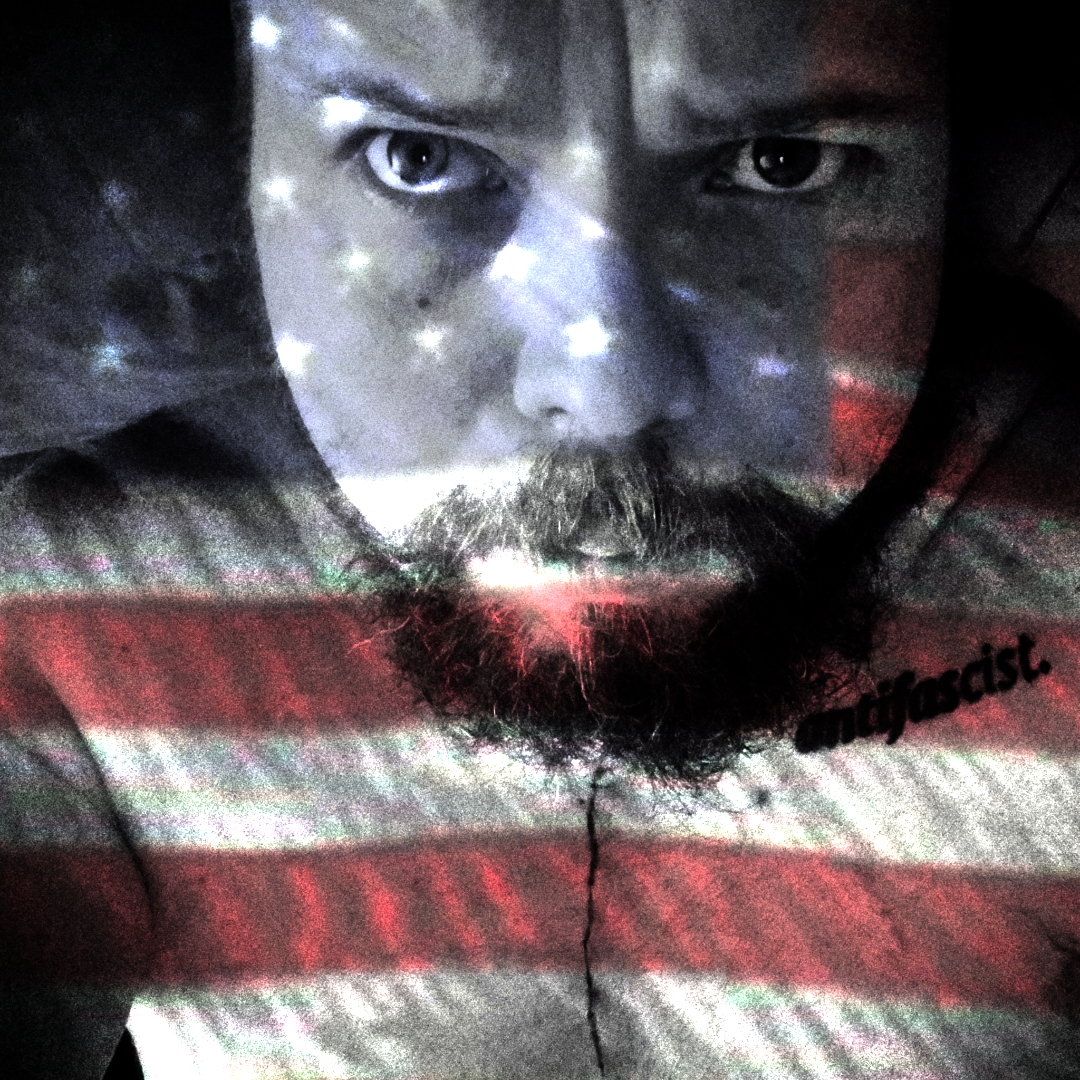
I am sitting in a room. It’s November 2nd, 2020, the day before the United States presidential election, half past eight in the evening, Greenwich Mean Time. The room is small, cluttered and only lit by cool dim LED fairy lights and the glow of my iPad. The only sound I hear is the whirrrrring of a small fan and the muffled voices of neighbors speaking a foreign language in the house next door.
The room is in a village just northwest of the boundaries of Greater London, England. I have been here since July, with my fiance, who is local. The village is quiet and suburban, like almost the entirety of this country, which consists of a few galactic clusters of population — London, Birmingham, Manchester, Bristol — with smooth gradations of habitation between; the urban cores fade to suburbia with many or no centers, and sometimes to “rural” areas which, to the eyes of an American grown up mostly in Texas and the West, still look like suburbs, or maybe exurbs — the sort of places where people can keep horses, but where you’re never more than twenty minutes or so from a supermarket and the buses still run.
I haven’t seen much of England due to circumstance and the pandemic — just this area, bits of London proper and a day trip down to Brighton on the southern shore to be assaulted by thieving and violent seagulls intent on my fish and chips — but what I have seen mostly reminds me of The Kinks’ song “The Village Green Preservation Society”. It’s quiet and subdued and the police blotter in the local paper is like something out of a Bill Hicks comedy routine: teenagers knocking over dustbins in the high street or shouting rude things at elderly dogwalkers.
It’s a calm and lovely place to recover from an open heart triple bypass, which I had in March, in Las Vegas, where I came here from. Even my limited access to NHS services — which I keep attempting to pay for out of pocket, which seems to baffle the doctors and receptionists, who insist that someone will sort it out and bill me eventually — has provided infinitely better care than I received in my own country, where I do not and did not have health care. Aside from a single checkup appointment with a doctor, a month after I was released early from the hospital due to to concerns over the coronavirus, the only followup I have gotten from the hospital where I received my emergency heart surgery are daily calls to pay my bill, which would probably cover the cost of a decent house in one of those horse-friendly exurbs.
My heart seems fine, but I have had complications with my muscles, my skin, my nerves, in my chest and shoulders and my left leg, where they removed the veins they grafted into my heart. My entire chest is still painful to the touch, and even wearing a shirt is unpleasant. Sometimes when I breathe deeply, I have a sensation inside my chest like a dented car door buckling as it’s opened and closed, and my right rotator cuff has somehow gotten badly torn and is impinging the ulnar nerve in my arm.
The doctor up the road is doing what they can for me, but they’re limited by my lack of citizenship and the pandemic, which has been very costly here in Hertfordshire, and so at the moment my main course of treatment is physiotheraputic exercises and a shit ton of codeine and anti-inflammatories.
Perhaps because of the cold or the damp, today has been especially bad, and so I’ve taken a great deal of painkillers indeed, and so my mind is gently drifting on a cloud as I refresh my social media and news feeds, again and again, desperate for some new news.
I am terrified of what tomorrow will bring. There are almost no possible futures branching out after tomorrow evening, American time, that do not lead down very dark paths indeed, and all of them I can foresee — and foreseeing things is what I am very good at — lead not to the center, but to the edges of the spectrum that lies between fascism and chaos.
I am an antifascist, though I do not belong to the imaginary “antifa” organization that Trump and his lackeys have made such a boogeyman for the American right wing. I simply despise fascism, and fascists, and white supremacy and white nationalism and the intertwining of any religion and the state, and authoritarianism of any kind. I believe in a strong welfare state because I know that it makes a nation stronger when its citizens can live and work without the terror of having no home, no food, no medical care, no jobs. By European standards, this makes me a dull centrist; by American standards, it makes me Josef Stalin.
After the last election, in 2016, I got the word antifascist. tattooed on my left pectoral muscle. It seemed necessary. I am a big, burly, bearded cisgendered heterosexual middle aged white man with bad teeth who grew up in Texas and, until I came here, drove a four wheel drive pickup truck. My family were in the oil business and, by all appearances, I am Donald Trump’s exact target demographic.
So the tattoo seemed like a way of committing myself, a very tiny way of stripping away from myself my innate racial and cultural privileges. I can never be anything but a cishet white American man, but I could at least mark myself as an enemy of those who would place all of society’s wealth and power solely in the hands of people who look like me. The tattoo was an attempt to practice what I preach, to hold myself accountable to the stand I take.
(You can argue that, if I had been really intent on marking myself for what I am, I would have done it on some part of my body that isn’t hidden underneath a shirt, and you might well be right, but the truth is I put it on my chest because I didn’t want to mess with the aesthetic balance of my existing arm tattoos.)
And now, of course, I am facing the consequences of my decision… and the reason I am refreshing those feeds so often and desperately is because, if Donald Trump remains President of the United States, I will be in very real danger the moment I set foot on my native soil. As long as he and his cadre of fascists and white supremacists hold sway over America, I will be a refugee. Because I will not allow myself to be killed by fascists.
When I got to London in July, I was stopped at immigration and sat in a waiting area nearby — exhausted from the long, claustrophobic airplane ride and wearing my Covid-19 face mask for something like twenty hours straight, and confused and terrified — until a very friendly woman came to sit with me and announced herself as a detective from Special Branch, who handle counterterrorism and similar issues in the United Kingdom.
The interview was brief and friendly, but it became clear that, for some reason, my politics were in question, I told her that I had never been arrested, nor involved with any militant groups, and that I was about as radical a leftist as Jeremy Corbyn. After what felt like hours but was probably about ten or fifteen minutes of me tiredly babbling at her, she told me I was free to go and that I wasn’t in any trouble. Frankly she seemed to regard the entire thing as a waste of time.
Afterwards, I tried to puzzle it out. Why on Earth would they send a Special Branch detective to talk to me? When I spoke to the immigration official earlier, the interview was brief and cursory, with no obvious red flags. I wasn’t carrying any contraband or anything illegal with me. So why the counterterrorism cop?
The only sense I could make of it was that the Americans had put me on some kind of watch list.
It actually made sense, because last December the US Customs and Border Patrol had denied my fiance entry to the US to spend Christmas with my family and me. She’d not outstayed her visa on previous visits; it seemed that the entire issue was that she’d visited the US too often over the past two years, which they dubbed suspicious. The CBP and its individual border patrol agents have absolute authority over such matters; there is no authority to appeal to in such situations. They have absolute power over anyone entering the United States.
I told my fiance to stay in Montreal, where she’d attempted to pass customs, and immediately called my Congresswoman and my Senator, and flew to Montreal myself to help sort it out. Senator Rosen’s office were incredibly helpful, reaching out to both the CBP and the State Department, though her staff cautioned me that they had no actual power to reverse the CBP’s decision; they could only advocate on my behalf.
After spending a week and a half — including Christmas — in Montreal hotel rooms, the local US consulate finally issued her a tourist visa and we headed to the airport. I waited for her while an CBP officer grilled her in their office.
As I did, I noticed a tattoo on the arm of another officer who wandered by — an American flag shield that looked familiar to me. I looked it up on my phone as I waited, and though I only saw it for a second, and I could be mistaken, I’m fairly certain it was the symbol of the American Guard, a group which the Jewish Anti-Defamation League consider “hardcore white supremacists”.
They allowed Michelle in, with a stern warning that this was the last time she’d be let into America, and we managed to spend a week or so in Las Vegas with my family. Not long afterwards, a Vice reporter contacted me about reports of white supremacists infiltrating the ICE offices in Pahrump, near Las Vegas — I was a newspaper journalist in Vegas for many years and I keep an eye on such things — and as an aside, I mentioned my recent experience in Montreal and the CBP officer’s tattoo to her. She made a particular note of it, as I recall.
If she followed up on it, I haven’t seen any articles — I suspect the pandemic derailed a lot of long-term journalistic investigations. Or maybe it simply went nowhere. And maybe I was wrong.
But that, combined with my campaign through Senator Rosen’s office and my moderately large presence on social media, made me think that it was was entirely possible that the CBP put me on some sort of watch list. I have repeatedly condemned them and called them out for their frequent abhorrent treatment of immigrants and detainees along the Mexican border, and have openly offered to help anyone in Las Vegas afraid of being caught up in ICE or CBP sweeps avoid them.
So the idea of finding myself on their shit list doesn’t seem particularly paranoid to me… especially at a time when the sitting president of the United States refers to antifascists as “terrorists”.
The CBP has, as I said, absolute authority and can act with absolute impunity at any port of entry to the United States. In the current heightened climate, with a President and a Department of Justice and a State Department who will back them to the hilt without any hesitation, is it really that unrealistic to imagine myself detained upon my return to the US as a suspected terrorist or radical? And — considering that I had my breastbone sawed in half and wired back together and three veins extracted from my leg and grafted onto my heart, only a few months ago — is it really unrealistic to worry that if they decided to get rough with me, as American law enforcement at every level is prone to do, that an overapplication of force or restraint could fuck me up permanently or even kill me? They could claim anything they liked afterwards: that I was aggressive, that I attempted to escape, that I was trying to smuggle drugs or guns or anything at all into the country. They could promise a full investigation, and make frowny faces and say that “mistakes were made”, as they often do.
And I would be no less crippled or dead because of it.
I do not trust the Customs and Border Patrol. I do not trust the American government, so long as Donald Trump is running it, to treat me as anything but the enemy that he and his flunkies have openly declared me to be. And as difficult as it has been to pack away my life and leave my home country, I will not return until I feel safe to do so. If I can’t stay in the UK — if my fiance and I can’t sort out any way to do that — I will simply travel to and between the few countries currently allowing Americans to enter their borders, until I believe that I can come home without harm. As exhausting and difficult as that sounds at my age and in my current state of ill health, it’s better than the alternative.
So here I sit, in this quiet, dark little room; Michelle has gone to sleep early in the bedroom with the cat curled against her, but I am far from sleep. Tomorrow is one of those days upon which the fortunes of nations are settled or unsettled, but for me it’s not just that — what happens tomorrow defines my personal future as well.
I have no idea how the election will turn out. I don’t know if Trump will lose. I think he will almost certainly lose the popular vote again, but he might swing the Electoral College, by fair or foul. And even if he loses in a landslide, I don’t believe he will concede the Presidency. He will attempt to tie things up in a tangled, chaotic knot, and his supporters will, I think, try to silence and stop his opponents through intimidation and outright violence. I’m not sure how that plays out either — whether the American Left will simply cave under the threat of civil war, or whether they will fight back.
Donald Trump is a tumor in the body politic of America… and like a tumor, even if the operation to excise him tomorrow is successful, it’s no guarantee that the malignancy that spawned him will leave with him. And so tonight I feel like a man waiting for a surgery — a risky one that will require months or years to recover from and which may still not get the job done.
If it doesn’t, I don’t think the America I come from, where I was born, will exist for much longer, at least not in any form I recognize or could survive in. And that mental and emotional pain is as exhausting as my current physical pain. I’m tired of Donald Trump. I’m tired of fascists and murderous cops and corporate oligarchy. I’m tired of reading interviews with small town bigots in big city newspapers, where they are portrayed with sympathy as they spew witless, uneducated gibberish that can only come from people who’ve never been outside their tiny communities. I’m tired of QAnon and all the batshit conspiracy theories. I’m tired of Nazis and the Klan and the respectable face of white supremacy. I’m tired of watching incompetent nepotists mismanage the American response to the pandemic. I’m tired of watching black Americans die at the hands of cops and brown children of many nations lie on pallets on concrete floors in cages. I’m tired of the Electoral College making a mockery of the idea that America is or ever was a true democracy. I’m tired of seeing millions of Americans sleeping in the streets, rousted from their sleeping bags, treated like criminals for not having enough money. I’m tired of seeing guns have more rights than women or gay or trans people. I’m tired of seeing myself and friends and family members suffer and even die from lack of the same kind of taxpayer-funded nationalized healthcare system that every other developed nation has.
I am tired of the fight. And so I hope more than anything that I wake up on Wednesday morning to the dawn of a new American era, but I don’t count on it. I think the fight is only beginning, and I wonder if we still have the strength and will to fight it, collectively and as individuals.
And I can’t help but think of what Paul Simon once wrote, in a song about America and those who, in the past came to her shores seeking a better life. Though his song is about immigrants, it applies just as well to me, an exile in a green and pleasant land, watching with trepidation as the country I love slouches towards either rebirth or death:
We come on the ship they call the Mayflower
We come on the ship that sailed the moon
We come in the age’s most uncertain hour
And sing an American tune
Oh, but it’s alright, it’s alright
Can’t be forever blessed
Still, tomorrow’s gonna be another working day
And I’m trying to get some rest
That’s all, I’m trying to get some rest.
James Randi
This BoingBoing piece conveys what always made me deeply uneasy about James Randi. He was very good at proving that a lot of people are scam artists and a lot of other people are gullible, but he was actively detrimental to actual scientific investigation of unexplained phenomena and claims of the paranormal – which I believe deserve to be treated with the same rigor and thoroughness as any other observed phenomena, even if the ultimate finding is that they were erroneous… because there are lessons to be learned even in error.
A good example are the occasional mass UFO sightings, such as the ones in Arizona, Nevada and Mexico in 1997. Such events are often dismissed out-of-hand as mass hysteria, and maybe they are… but the idea that hundreds or thousands of people can “hysterically” see the same hallucinatory visions is as interesting in and of itself as any extraterrestrial explanation.
The center cannot hold.

So here we are, a week away from the 2020 US election, which will almost certainly decide whether or not the United States has a future as a viable nation-state. If that seems like an exaggeration, you probably don’t really understand the scale of the mess America is in.
There is, for only maybe the second time in American history, a very real chance that an actual civil war will break out over the results of a presidential election. It’s not as unthinkable as most Americans believe. My friends who still live in rural parts of the West tell me people in their towns are quite literally locking and loading, buying up ammo in preparation if Trump loses. To do what, exactly? I don’t know. I can’t imagine they think they’re going to run an insurgency against the US military… but I think they believe that they won’t have to.
This Atlantic article lays it out pretty well, but the biggest barrier to predicting the events of the next three or four months in America is not that Trump will not concede the election. It’s not a barrier because it’s a near certainty. There is no version of this where Trump acknowledges defeat, gracefully or otherwise.
No, the biggest barrier is that there’s no clear answer to what happens after that, after he claims it was rigged, that mail-in ballots were fraudulent, that he’s still the President. There’s no clear answer because the Framers of the Constitution never imagined such a possibility happening. They may have been racist, misogynist, slave-owning white supremacist douchebags, but they also existed at a time when gentlemen simply did not behave that way.
But Trump is the polar opposite of the definition of a gentleman, then or now, and he’s going to kick up a ruckus and absolutely push it as far as it will go. He’s a textbook psychopath with a fragile ego, the worst sense of Rich White Man entitlement this earth has ever seen, and is likely facing prison — along with his immediate family — once he’s out from under the roof of the White House. He is not mentally or emotionally capable of grace, much less grace in defeat.
And so that leads us to a very bad place for the most powerful and wealthiest nation-state in a world interlocked by global networks of economy and finance and industry to be in: namely, chaos.
This winter is going to be very very hard indeed, on America and Americans and indeed the entire world. COVID-19 has kicked the moorings out from underneath the engine of global capitalism and showed how desperately fragile it really is, contrary to the bluster and bluff of free market advocates who insist that it is the economic version of Darwinian selection — which it is, to some extent, but that’s not a good thing on the day when the asteroid comes and ruthless efficiency of food-gathering isn’t as useful as being small enough to hide in cracks and warm-blooded enough to survive the endless winter afterwards. Modern, Milton Friedman-idolizing late stage corporate capitalism relies above all else upon endless increase of profit margins, and as we’ve seen, when they cease due to something that money can’t seem to control, such as the coronavirus, businesses that have lasted centuries die sad deaths over the course of a few months.
One of the most serious forms of collateral damage from this is going to be in the form of mass evictions, as soon as the moratoriums put in place by various jurisdictions run out. A lot of people don’t seem to understand that these moratoriums are not debt jubilees — if you haven’t paid rent since March, you’ll owe it, January 1st. All of it. Whether or not your landlord is willing to take payments, whether they charge you consecutive late fees for all that time accrued, is probably going to be entirely at their own discretion.
One of the things that modern capitalism is incapable of is systems thinking; it’s every capitalist for themselves, swimming the heady seas of commerce like a shoal of fish that forms a shape like an Invisible Hand. But that narrow focus, that greed and pitilessness, is one of capitalism’s failure points.
In this case, millions of landlords and property managers protecting their individual investments by evicting people who, in many cases, are still unemployed or underemployed due to the pandemic, is going to cause a cascading series of economic failures that will, in and of themselves, bring America to its knees. A key point to remember here is that this will happen regardless of the election outcome, as even if Biden is elected he won’t take office until January 20th, by which time those eviction processes will have already begun and, in many cases, be carried out. The likelihood of another federal moratorium extension are slim to none — and while many states will enforce their own, others won’t.
So that’s one major crisis waiting in the wings. Another is that there’s a pretty good chance that this winter will prove to be another extremely cold one, due to polar vortices coming in from the north, borne on the currents caused by rapid Arctic ice melt. That’s always bad, but combine it with millions of Americans suddenly displaced due to evictions or climate collapse events like the fires in the West, and you’re looking at a deadly one-two combo punch indeed.
And, of course, the virus; the virus that is on track to kill a quarter of a million Americans by mid-November and maybe a half million by Inauguration Day, and which is absolutely kicking the living hell out of not only domestic but foreign trade. Despite Trump’s witless babbling, the coronavirus shows no signs of petering out and there’s no vaccine in sight.
The best metaphor for this fourth quarter of 2020 is what William Gibson refers to, in his recent novels The Peripheral and Agency, as “the Jackpot”: a notional set of crises which could, individually, be managed with massive coordinated effort… but which all hit at the same moment, like a royal flush on a Vegas slot machine, leaving the entire planet punch-drunk and on the ropes.
And into this existentially precarious moment — precarious for not only America but the entire human race — walks Donald J. Trump, the human equivalent of a beer mug falling off a bar in the middle of a tense old West saloon showdown.
Partially because of the Founding Fathers’ inability to imagine absolutely shameless sons-of-bitches like Trump and Mitch O’Connell getting into the driver’s seats of America, and partially because of their own inefficacy and fecklessness, it seems unlikely that the Democratic Party will do much if Trump decides to cut loose after the election. The problem is that, like the Republicans, the Democrats have come to understand American democracy not as the mechanism of providing for and doing the will of the people, but as a team sport in which winning is not defined by carrying out the objective of good governance, but by getting votes and holding districts. A cynical man would argue that both parties are most interested in the gaining of power in order to sell it to the highest bidder; I am a cynical man and I do in fact argue this, but not at the moment. Electoral politics is always corrupt, but this goes beyond simple pork barrels and lobbyists with their hands in their pockets.
The Democrats fancy themselves as five-dimensional chess players, and maybe by the laughable standards of Washington they are. But the problem is that they’re sitting down at an exquisitely carved chess board across from Leatherface from The Texas Chainsaw Massacre. They’re thinking five moves ahead… except their opponent isn’t actually moving his pieces. He’s waving that Husqvarna around and sawing through the chairs and the walls and the table the chess board is sitting on, while the Democrats sit there and make impatient scoffing noises and demand to know if we, the American public, can see what this guy is doing? He’s not even strategizing correctly! It’s like he isn’t playing the same game as them at all.
So when Trump starts calling the election a fraud, and attempting to send his own electors — hand-picked by Stephen Miller or Jared Kushner, because Trump has the attention span of a fruit fly on PCP and isn’t interested in conversations about other people, because other people are not Donald Trump and therefore irrelevant to his interests — the Democrats are going to continue to do what they’ve done so far, which is release a series of strongly-worded condemnations. The Senate belongs to the Republicans, so there isn’t much they can do anyway. And if the Democrats are team players, the Republicans are more akin to a death cult. They have no allegiance to America or the American people, which they prove in every election by trying every means, fair or foul, to rig the outcome in their favor, through cheap stunts and gerrymandering and voter intimidation. They only care about total victory, and as one of their elder statesmen and heroes once said: they will burn the village to save it.
But let’s imagine an unlikely scenario: Joe Biden absolutely sweeps the election in a landslide, one that not even a Republican-held Senate or Trump’s newly-packed Supreme Court can call into question. Trump continues to mewl and simper about “fraud” and “antifa” and whatever, right up until the moment that Biden shows up to the White House and Trump is, as Biden has suggested, frog-marched out of the joint. America’s long nightmare is over… right?
Nope. That’s when things really go off the rails. Because even without the office of the Presidency, Trump is a cult leader, and his cult consists of millions of Americans, the least-educated and least-intelligent and least-tolerant and most belligerent sector of the citizenry… and America is a country where lack of education or intelligence or tolerance or an even temper present zero barriers to purchasing and maintaining large collections of military-grade weapons and ammo.
I think that, for these people, collective street-level violence come January 20th is not a question. The only question is whether they get to be the Imperial stormtroopers or the Rebel Alliance, but I don’t think they care very much. What they care about is what the Democrats should care a lot more about than they appear to: that this is a pivot point in the history of America, and that this is either the end of the dominance of the far right wing in American politics or culture or its triumph.
So let me put this plainly and bluntly: I believe there’s a pretty good chance that these people will attempt to start an armed insurrection or an all-out civil war, at some point between Election Day and Inauguration Day. I don’t think it will be a territorial war, no North vs. South or even ISIS attempting to reclaim the lands of the ancient caliphate; I think it will be everywhere, in every part of America. I think it will be factional, like the various post-Soviet conflicts that broke out in the Balkans and other hotspots in the 1990s; I think they will not meet much active resistance from non-state leftist actors or activists; I think the federal government will be paralyzed by this crisis of leadership and unable to effectively respond; and I think that, on top of every other goddamned thing happening right at the exact same moment, that there is a fairly good chance that the United States of America will be a failed state by next summer, because — politics aside — the already-teetering economy cannot withstand this level of chaos.
How do we avoid this? I’ll be honest: I have no idea. It might be that Trump losing the election badly will take the wind out of the sails of the various increasingly organized right-wing militias and movements. It might be that the Democrats manage to sweep both the House and Senate, as well as win the presidency, and that might be enough to allow them to offer a decisive response to Trump’s recklessness and chaos creation. It might be that some of the Republicans remember that they serve all the American people, not just the ones in their party, and stand up to their thoroughly immoral leadership. Stranger things have happened.
But of course, none of that is likely. The system has been gamed so thoroughly and the Republican Party so thoroughly infiltrated by crazies and mercenaries and psychopaths and delusional Jesus freaks since 1980 or so that none of that is likely at all. I think a stalemate in the halls of power is the best case scenario… and that stalemate will not carry out into the streets.
So if I’m right, and America does break out into factional civil war or street-level insurrection and violence on a massive scale? How does that play out? I have no idea. Depending on who actually ends up in the White House, we might see UN peacekeepers in American streets next year, but I doubt it. I think that nobody on Earth, no other nation or collection of nations, is willing to directly intervene in this lunacy, despite the fact that every country on Earth will be impacted directly or indirectly by it.
For example, the United Kingdom — where I currently sit — is in a lot of trouble if America goes apeshit. Boris Johnson and the Tories have entirely put all of their post-Brexit eggs into the basket of new trade agreements with the US; if those agreements don’t happen, the UK is in very serious trouble and very well may lose Scotland to independence and EU membership. China may win political supremacy if America falls, but too much of their economy currently relies on American trade and manufacturing for them to easily withstand even a brief period without it. Russia? Russia would be happy to see America fall, but it’s not like they’re in any position to take our place economically. This is more about settling scores than anything else. And of course, if America falls, the already precarious situation in the Middle East explodes. Israel loses her biggest ally, but the Saudis also lose their biggest customer.
An America divided in violent civil war would not necessarily mean the end of the world, but it would probably mean a shake-up unseen on the planet since the end of the second World War, and maybe something more akin to the fall of Rome in terms of a complete and rapid redefinition of the status quo. And maybe more dramatic even than that, because Rome did not sit at the center of a global spiderweb of money and war and diplomacy the way America does. The end of America could be the geopolitical version of a singularity; a phase change so dramatic that it’s impossible to predict what the world looks like on the other side of it.
I certainly can’t. But I’m frightened enough of it that I am not going to return to America if I can help it in the near future. If I can’t find a way to stay with my partner here in the UK, I’ll go to one of the other entries on the short list of nations that are allowing Americans to enter during the pandemic. I’d rather live on bread and butter in some village in rural Turkey than return to a country that’s the equivalent of a gunpowder factory, with a big stupid orange asshole real estate con artist from Queens standing out front with a Zippo in his fat fingers.
If you are one of the hundreds of millions of my fellow Americans who were not lucky enough to have an exit strategy and find yourself trapped in a volatile country on the edge of chaos with no easy means of escape, my advice is to get as ready as you can for whatever comes, and do not assume that a Biden win will end the turmoil. In fact, it may precipitate it. Be wary, pay attention, and if you have a way to get clear of the madness, take it.
I am scared for you, for all of you, and for all of us, every human on the planet. Because a hard rain’s a-gonna fall, and God only knows who will be left when the waters recede. Hopefully it will be most of us; hopefully it will be any of us at all.
Vaya con Dios, mi amigos.
The Trick Is That There Is No Trick.
Now I’m not all I thought I’d be
I always stayed around
I’ve been as far as Mercy and Grand
Frozen to the ground
I can’t stay here, and I’m scared to leave
So kiss me once, and then
I’ll go to hell, I might as well
Be whistlin’ down the wind.
— Tom Waits
I was hanging out with a friend of mine tonight here in Yakima, a young Latina, a single mother of four, and we were talking about how Yakima, and other places like it, are not like urban America. Most of the people who live in rural America these days are either trapped here by circumstance — getting married or pregnant early, or simply not having the money or the opportunity to move away — or because they reject the values of the big city. (It’s slightly more complicated than that, but, well, that’s a whole other blog post.)
I found myself recommending to her — as I have to several of my friends here who are young and at loose ends — that she learn to code, as a way to take hold of her own economic destiny, and that of her children.
New readers might think at this point “God, yet another fatuous tech bro telling people all their problems will be solved if they just learn to code.” But longtime readers, and anyone who knows me, will know that I am decidedly not one of those people at all. I have argued at great length that one of the great failings of the tech industry is the nonsense notion that it’s a simple meritocracy — that anybody can do what we do.
The thing is, I think that is true… but only in the most theoretical of theory. The reality is far different.
I have one of the most diverse socioeconomic backgrounds of anyone I’ve ever known, but go ahead and assume, for the moment, that as far as this discussion goes I’m an average sample of the tech industry: a straight white male raised in the middle class. I got my first computer from my grandfather, an electrical engineer, when I was five years old: a Commodore VIC-20, along with a book on BASIC programming. “Where are the games?” I asked him. “Write some,” he replied. So I did, crappy little text adventure games, with very simple if/then logic. Nothing to write home about. but not bad for a little kid in 1983. I was kind of a prodigy.
My family saw to it that I always had a computer growing up — not always the fastest or newest, but something. I got on BBSes when I got a modem in the late 80s; I started fucking around with Photoshop in 1993; I made my first HTML page in 1995; I wrote my first PHP code in 1999 or so. I’ve been doing it for money ever since — sometimes good money, often bad, but I’ve never really been out of work if I was willing to hustle to get it.
My friend? She was not so lucky. She’s had a hard life. She’s a first generation Mexican-American, a child of divorce, who got pregnant young. She’s never had money or access to resources or advanced education other than what she might get at the local community college.
Despite that, she’s incredibly brave and smart and curious. She’s perfectly capable of being a web developer. But the biggest difference between me and her is that nobody ever told her she could be a web developer. That was never an option that was put on the table for her, the same way that option is almost never put on the table for poor people in this country.
But here’s the secret I want to share with you: anybody really can be a coder in America. It requires, basically, four things:
- A computer. Not even a great computer; a used $200 laptop from a pawn shop will work perfectly well.
- An Internet connection, or regular access to one, at the library or a coffeeshop if you don’t have one at home.
- A certain amount of time each day to devote to learning.
- A willingness to bang your head against the knowledge you need until it makes sense.
If you want to be a Web developer, you need to know three things: HTML, CSS and Javascript. That’s basically it. (And you need to understand the basic client-server architecture of the Internet, but that’s not even absolutely necessary to get into in any hardcore super-geeky detail.) That’s not a small amount of information, by any means, but I know people who’ve walked into the “coding bootcamps” that are so popular these days and walked out three months later with enough knowledge to get a job in the industry immediately.
Of course, most poor folks can’t afford either the enrollment fees or the time off work to attend such a bootcamp. But I would estimate that in six months, studying for two or three hours a day, five days a week, you can learn enough to get an entry-level position in tech. A gig at a hip San Francisco startup? Probably not, unless you’re middle class and know people. But here’s the great thing about tech: everybody needs it. The big employer in your small town needs somebody to write web apps, or at least maintain a WordPress site. Local businesses will pay for you to make them websites. That entry level gig won’t be sexy, but it will almost certainly pay more than minimum wage…and in a place like Yakima, where the divide between the haves and the have-nots is pretty huge, that’s a big deal. It’s a ladder leading upward.
One objection people often raise to me is: I’m not into that computer stuff. It’s boring. Yeah, it can be, especially at first. After a while, it’s not. After a while, you’re excited by the potential you have to make things that can a) make you decent money and b) maybe, possibly, perhaps, change the world. And more importantly: you know what’s more boring than looking at computer code all day? Working as a cashier at fucking Walmart for minimum wage for the rest of your life.
Would you rather have a job that was boring and paid you $75K a year or a job that was even more boring, except you’re taking home a third of that, and being treated like a disposable piece of garbage by your employer, and having to wear a stupid vest?
If you’ve never lived in a place like Yakima, it’s hard to really understand how limited your options are if you didn’t start out with money and you can’t run the hell away. Working as a Walmart stocker or a McDonald’s fry cook or cleaning motel rooms isn’t an afterschool thing for high school kids: it’s good, steady work. Career advancement? Sure, you might end up an assistant manager or shift supervisor. You might even take night classes at Yakima Valley College so you can get a job as a machinist or a nurse. Maybe. If you can find somebody to watch your kids…except babysitters cost money, and if you’re making $9 an hour, where’s that money coming from?
But you don’t need a degree to work in tech, not even an AA from a community college. Shit, I’m a high school dropout. I have a GED. I went to a semester of art school before I dropped out to write and code full time. Nobody fucking cares — and if they do, they’re probably douchebags, and not worth working for. I respect academic achievement, but in the tech industry, it’s not a requirement. Ability is what matters, very generally speaking.
And as much as I firmly believe the tech industry has a strong (if often oblivious and unintentional) streak of misogyny and racism running through it, I also believe that if you’re legitimately smart and good at what you do, you will always find a way to at least get your foot in the door… and once you’re in, you have the opportunity to be part of the solution, making things better for people like you.
I realize that sounds simplistic, but look: nothing will change in tech unless there are more people working within it who want change, who are willing to stand up and speak out and push for that change. And that means more people of color, more women, more people who aren’t middle class white and Asian dudes who went to Stanford or Berkeley. We know what the problem is; let’s work on getting people in the door who can fix it.
One of the things I’d like to do here in Yakima — one of the things that would make living out here in almost total social and cultural isolation worth it for me — would be to set up free basic Web development classes that would be open to the public. Anyone could attend, but I’d focus my outreach specifically on the Hispanic migrant worker population and the Native Americans on the reservation, who are the poorest and most marginalized groups here.
Poverty begets poverty; marginalization begets marginalization. The institutional treatment of Hispanics and Natives in Eastern Washington ranges from paternal to patronizing to frankly barbaric. The city of Yakima has been embroiled in a suit with the ACLU over redistricting that would give Hispanics a better chance to get on the city council and be involved in running a community in which, depending on the season, they may actually be the majority. No one has given any reasonable explanation I have found for why the city would fight the redistricting, except that Yakima is a city that’s always been run by the rich white people who own the vineyards and orchards and fruit packing companies, where Latinos are routinely regarded by the Anglo community as little more than gangsters and drug dealers and ignorant laborers.
And I don’t know much about the situation of the Natives on the Yakama Nation reservation that borders the city, but the little I do know about — like the old boarding schools where Native children were given “white” names and converted to Christianity, a practice which continued until 1978 — does not lead me to suspect everything is coming up roses out there, either.
For the majority of the Hispanics who come here, success is defined as earning enough money to feed their families here and send money to those who were left back home, and maybe to open a small business of their own some day like an auto repair shop or a carniceria. The idea that their children might become startup CEOs or CTOs is as ridiculous and inconceivable an idea as the idea that they’ll grow up to wrangle unicorns for a living. Tech is a gringo thing. So they don’t encourage their kids to pursue those dreams, and neither does anybody else, the same way nobody encourages a black kid living in the projects in inner-city Los Angeles or Chicago or Queens to be a coder. Better to be realistic, right?
The pathway to getting there isn’t hidden, exactly; aside from a few red-pill shitbags, nobody’s actively trying to keep people of color or women out of the tech industry. But nobody’s going out of their way to shine a beacon to draw them in or make them feel welcome, either. Hell, most tech folks wouldn’t know which way to point such a beacon if they did.
This is where the tech industry’s image of itself as a meritocracy fails, in my opinion, because most people within it have no concept of what the world outside of their middle-class upbringing is really like. They think anybody can win the game if they play hard enough. But to win a game, you first have to be aware that a game even exists…and that you, too, can sit at the table and play.
To me, this is one of the most important things we in the tech industry can work to accomplish. If I could figure a way to do it full-time here and still earn a living, I would, but I don’t even know how to go about that. I am considering donating my time to teaching such classes, at least as soon as I’m on a little more stable ground, financially, than I have been this past year. (That too is a whole other blog post, but if you don’t know me, you probably don’t care.)
I’d start by choosing a curriculum from one of the free online learning resources like Codecademy or Coursera, and using that as a basis for classroom education and interaction. I’d find a way to get computers in the classroom for those who don’t have them — maybe, say, hit up one of the Westside’s reasonably successful tech companies to donate netbooks. I’d start with HTML and CSS, and then offer an intro to Javascript as an advanced course. My goal would be to get the students familiar enough with these technologies that they could continue to teach themselves once the class is over, and provide them with starting points for that continuation — teach them how to teach themselves, the way I did and a lot of geeks do.
But maybe even more importantly, my goal would be to hammer home the idea that yes, this is totally something they can do, just like rich Anglos. (If you’re in the tech industry and don’t think of yourself as “rich”, keep in mind that for a lot of the people I’m talking about, anyone who makes more than, say, $75K a year is rich.) The trick is that there is no trick; the lie they’ve been taught, explicitly or implicitly, is that there’s some barrier to entry that you can’t cross. There isn’t; they can do this.
Would this solve all the problems the migrant workers and Natives here face, or bring about a sea change in the tech industry’s attitudes? Of course not. I’m not that naive. But hell, if we could help foster even the possibility of bringing these marginalized communities into the tech industry, it would be worth it, I think.
Can you imagine it? That’s what I asked my friend tonight. Can you imagine making enough money that you didn’t run out at the end of the month? Having enough to put more than you make right now into your savings account, each and every month? Never worrying about whether you’re going to be able to put food on the table or pay rent, or handle the medical bills if your children get sick? Knowing that your boys would be able to go to any college they wanted, that when you were gone they wouldn’t be left with nothing? Wouldn’t that be worth the effort to learn this boring shit, how to make web pages and program them?
For most of the people who enter the tech industry, this isn’t something they can only imagine — it’s the default condition of existence. Hardship, for most tech industry people, means having to move home to live with your parents in their basement because your startup ran out of funding, not moving into a homeless shelter or having two families in a two bedroom apartment. Hardship means having to share a car with your spouse, not riding a shitty public bus ten miles each way to and from work. Fear is not being successful, not getting rich or powerful or living up to your potential, of being ordinary.
It’s not the fear that comes with seeing roaches crawl across your child’s bedroom floor when you turn on the lights, and knowing that it will never get any easier than this, never get any better, no matter how hard you work; that you’ll never own a home, that you’ll leave nothing when you die except medical debts. It’s not the terror of looking out the window of your shitty one-bedroom apartment and seeing your preteen son hanging down on the corner with the dealers, and knowing that if he isn’t slinging for them already, he will be soon.
And why not? The dealers are the only people he’s ever seen who drive Escalades and have money to spare. Who else has he got as a role model? You? Working your ten hour shift at Jack In The Box and coming home bone weary in your paper hat to sit in the shitty folding chair at the shitty Formica table you bought at the thrift store, choking down another fabulous meal of leftover Sourdough Jacks and stale curly fries — the only real benefit your employer offers you, as you never get scheduled quite enough hours to qualify for insurance. Rich white motherfuckers on Fox News can blather on about the value of hard work until they’re blue in the face, but even a little kid can see that hard work isn’t getting you any fucking place at all but an early grave.
Start what up? Chief technical what? In the words of Senator Clay Davis on The Wire: sheeeeeeit.
Hope is not a destination; it’s a doorway. If it’s closed to you, you can’t even guess what lies on the other side. But what if we could open that door for all those terrified, hopeless people, all those apple-pickers and corner boys and trailer trash, living and dying in the corners of this sprawling, beautiful, terrible nation of ours? Just open the door, just a crack; that’s how the light gets in, as Leonard Cohen says.
It’s not an answer, but fucking hell, y’all, it’s as good a place to start as any.
A response to Zoë Keating’s post about YouTube
[I don’t post comments on other people’s blog posts much these days, because as we all know the comments section is usually the equivalent of the pit underneath the blog’s outhouse. But I did post a response to Zoë Keating’s What Should I Do About YouTube, which has been making the rounds, and I thought it was worth republishing here, as it will be lost in the flood there. Go read that before you read this.]
Hi Zoe. We don’t know each other but we have a gazillion friends in common and I think we’ve spoken on Twitter before. I normally don’t do the comments section but I thought it would be worth it this time.
Back in the Dark Ages of 2003, I founded an online music store where artists could sell their own work for their own price directly to their fans and keep 70% of the proceeds. (Maintaining infrastructure was a lot more expensive back then.) I’m a musician and the grandson and great-grandson of musicians (concert pianists) and grew up as the son of a working singer/songwriter, and I wanted to build something that empowered both artists and fans.
It failed, for a variety of reasons, and it wasn’t until Bandcamp came along years and years later that I really felt like somebody had realized my dream, and done it far better than I had. Bandcamp isn’t perfect but out of all of the music services out there that I know of, it has the best experience for both artists and consumers, and I say that not only as somebody who’s worked in this sector for nearly fifteen years but also as someone who both buys and sells their work on Bandcamp.
And yet, in the grand scheme of things, they’re a second tier service in terms of market share if not quality. Is it because they’re not good at marketing? Not good at running their business? I don’t think so. I think it’s because they’re not doing what the bigger online streaming/retailers are doing, which is showing a Janus face.
With one face, they’re telling the consumers that they’re about empowering them, giving them tools to create and share. But with the other face, they’re reassuring the traditional music industry power structures that, no, it’s gonna be business as usual. And, as in most conversations about music or any other form of creative industry these days, they’re not really thinking much about the actual creator, the artist themselves, and about what you said in this post — that it’s YOUR right to decide how your work is distributed. They’re giving you ultimatums that they’d do almost anything to avoid giving to either consumers or label people. Why? Because you don’t have juice, as you said, and you’re in a position where the flow of things dictates that you’ve been put between a rock and a hard place: piss off the platform or piss off the fans. I don’t envy you that. (Though as a musician I do envy you actually having enough fans to worry about pissing them off. My fan base tends to get pissed when I don’t call it on its birthday, but that’s easily remedied by calling it up and saying “Sorry, Mom, I’ll buy you an Amazon gift card.”) 😉
There was an article today on GigaOm dismissing the tech critic Andrew Keen, and a lot of the refutations of his (often quite valid) criticisms come down to: is a world run by the tech industry really any worse than the way it used to be? And you hear that a lot in the digital content distribution space: is this worse than when the old school record industry ran things?
And the answer is: if that’s the way you have to frame that question, then it doesn’t matter if it’s worse, because it’s clearly not much better. And ultimately it doesn’t matter to the artists who’s giving them the shaft: some douche with a ponytail in Hollywood or some douche with a waxed mustache in Mountain View. It’s still the shaft. It still sucks.
The point of all of this technology is not to replace one shitty status quo with another one, it’s to create new status quos (statii quo? Whatever, my Latin sucks.) in which everybody gets what they want. I don’t think that’s impossible; I don’t think it’s a zero sum game. But it saddens me that, in all the years since the rise of MP3s and Napster and Gnutella and everything else, the one person who seems to keep getting that shaft is not the fan clamoring for music to listen to and love, and not the executive looking for a way to monetize that clamoring, but the artist. It’s always the artist. It’s why The Ramones broke up because they weren’t making enough money to pay the rent while touring and getting something like a $25 per diem per member.
That status quo has never changed.
But look: right now, you know who people are looking to to solve these problems? You. You are at the forefront of this new unexplored territory, you and artists like you, who are breaking this ground and asking these questions and taking these risks. I like to think of myself as a mostly unnoticed innovator in this space, but I still look to you to see how this is all playing out. I know it’s not a fun position to be in, but it means that your decisions will serve as a guidepost for others to come. You’re setting precedent; you’re shaping things.
I don’t know what to tell you to do. The punk rock part of me wants to tell you to tell Google to go fuck themselves and let’s build something new. But that’s an easy position for someone with no skin in the game to take. But you seem like a really smart person, and I’m sure that whatever path you take will be the one that’s right for you. And no matter how much anyone else is looking to you, that’s the only person you really need to consider: yourself, as an artist.
So good luck with it. And I hope you don’t mind me saying so, but please wish your husband the best for me. Even though I don’t know y’all, I’m pulling for you.
Rock and roll.
Roasted Mango And Cheese Stuffed Bacon Wrapped Mini-Bell Peppers


As far as I know, this is my own invention, a sort of king-hell mashup of stuffed peppers and Sonoran hot dogs, which are perhaps the finest thing ever invented by our friends south of the border.
Ingredients
- Roughly 1/2 bag, mini-bell peppers. These have been popping up in stores for the last couple of years, they look like hot peppers but they’re some kind of weird genetically mutated pygmy bell peppers. They come in orange, red and yellow, in little bags. You’ll be using as many peppers as you have slices of bacon in your bacon package. In mine it came out to twelve, which required….
- 1 1/2 cup canned diced mangoes. (No, not fresh whole mangoes. Just trust me, dogg.)
- 1 cup Monterey Jack cheese.
- 1 package, thin or medium thickness bacon. (Whatever kind of bacon floats your artisanal boat, there, hipster.)
Optional Garnishes
- Sriracha
- Sour cream
- Your tears as you weep at how tasty it is
Equipment
- Roasting pan with rack
- Spoon
- Bowl
- Small knife (serrated is fine)
Preparation
- Preheat your over to 425°F.
- Drain the sweet nectar out of the canned mangoes into a separate container and set aside. (This is why you want the canned ones.) Pour the diced mangoes into a bowl with the cheese and mix them together. Kind of mash it up a bit — it doesn’t need to be pureed or anything, but you want to squish it up.
- Chop the tops off the peppers, where the stems are, so the top of the pepper is open. Use the knife to scrape out the seeds and the pale inside kind of flap things inside the peppers.
- Use your fingers to stuff the cheese/mango mix inside the peppers. Make sure they’re as full as you can. As you push the stuff in, it will squish even more.
- Wrap each pepper in a strip of bacon and place it on the rack in the roasting pan so that the end of the bacon strip is on the bottom, keeping the bacon wrapped securely around the pepper.

- Roast that shit in the oven for 50-60 minutes, until the bacon is fully cooked.
- Remove from oven and immediately drizzle mango nectar over the peppers. Don’t worry about using too much, it’ll drain into the bottom of the pan.
- Let cool for ten minutes or so before enjoying.


Downbound Project
[Update: an official statement from the DTP says that 30 employees, or 10% of its staff, are being laid off, not 30%. However, it also gives the impression that many of its projects are being shut down or defunded, which means that the people employed by those projects – and therefore not technically DTP employees – are losing their jobs as well. I’d be curious as to the actual numbers of those people, but I’d be surprised if even the DTP knows for sure, given their less-than-stellar organizational skills.]
A lot of people have reached out to me today asking my opinion on the news that Las Vegas’s Downtown Project is laying off 30% of its workforce, and that Tony Hsieh seems to be actively distancing himself from it. They want to know what I think because, for a few years, I was maybe the most vocal critic of what Hsieh was doing with downtown Vegas.
My immediate feeling is: it sucks to be right. My heart goes out to those folks who’ve been laid off and now have to figure out how they’re gonna survive. I know that fear intimately, and wouldn’t wish it on my worst enemies. I wish them very good luck.
Beyond that? Well, I am Jack’s total lack of surprise. I warned people this was coming, for a long time, and very few people paid attention. I was very angry about what was happening downtown, but not because I thought the DTP was going to collapse. I mean, I did, and it seems I wasn’t wrong, but my primary concern was with the collateral damage to both the existing Las Vegas cultural community and to the marginalized population of downtown. Unfortunately, despite all of my rage, things proceeded as planned: the poor people and existing small businesses were pushed out and replaced by whatever the hell Hsieh and his circle wanted to put in, like the Container Park, which is neither a park nor made of shipping containers.
So what can be learned from all of this? There are some pretty clear lessons here.
1. Hire people who know what they’re doing, not just people you like hanging out with. It’s not much of a secret that Hsieh brought people into the DTP because he felt they were a “culture fit”. Unfortunately, the culture in question was very much a frat bro party culture, which means that a lot of the people who got discretionary power over projects were, to put it mildly, not qualified for the jobs they found themselves in. And a lot of people who were competent who came in on projects were either marginalized out as not being “good culture fits” or left in disgust because their ability to do their jobs was limited by the useless idiots that they found themselves answering to.
That culture pervaded and continues to pervade a lot of the entire Vegas tech culture: startups that seem more like excuses for a bunch of bros to go and play witless giant board games at the Gold Spike and talk about marketing strategies for their awful ideas, rather than actually producing products that people would want. There are a lot of hard-working people in Vegas tech, to be sure, and some very bright ones…but very few of them were the ones actually making decisions, and their hard work and good ideas are stymied by the dipshits who are put in charge.
I’ve said it before, and I’ll say it here: if you want your business to be successful, hire people who are good at their jobs and let them do their jobs. You may not want to be besties with them and do shots with them every night, but who gives a shit? As long as they do what they’re supposed to do and are capable of working within your team, that’s what you should be focusing on.
2. Cities are not startups. Nor are they fucking Burning Man camps…but that’s exactly what Downtown Vegas, as envisioned by the DTP, seemed to resemble. What the decision-makers seemed not to understand is that, rhetoric aside, Burning Man is not a city. It’s not permanent. It couldn’t be. There’s a reason that Hakim Bey — one of the people who influenced the whole initial culture of Burning Man — called such places “temporary autonomous zones“. For all the talk of anarchy, Burning Man is a deliberate and very controlled environment, primarily made up of people who buy into the culture around it.
A real city like Las Vegas is far more chaotic, and filled with people who have absolutely no intention of getting with the program. And in a real city, you can’t just throw those people out for not being cool, man, no matter how many Downtown Rangers you hire to move the street bums and the crazies along. You can’t just make those people vanish. In a city run by responsible people, there would be places for the people who were pushed aside by the DTP to go — but Vegas is not a city run by responsible people, and a lot of those folks just ended up on the streets.
If you want to create sustainable private urban development, you need to understand the community you’re operating in, and Hsieh never did, nor showed any real interest in learning. He just wanted to remake the city in his own image, and seemed surprised when the city didn’t respond with the total slavish enthusiasm he anticipated.
3. Coordination, realism, follow-through. Hsieh’s people were constantly telling me that nobody was really in charge of everything, as if this was a good thing. But nobody seemed to know what anybody else was doing. It was disorganized and uncoordinated, and God knows how they handled the budgets for everything. (Today’s news suggests: not very well.) And a lot of the initial visions were utterly unrealistic, or simply required a lot more money than anyone involved anticipated. Not because realistic budgets were hard to project, but because Hsieh didn’t hire people who were capable of it. As a result of this, a lot of the announced projects just never materialized, or materialized in some half-assed form.
The Container Park is an excellent example of this: while I am a big fan and longtime advocate of reusing things like shipping containers in architecture, the fact is that Vegas is smack dab in the middle of the hottest desert in the Western Hemisphere; building a shopping mall out of steel boxes (and then, inexplicably, decking it out with shiny metal outdoor furniture and metal children’s playground equipment) is therefore kind of a stupid idea. They would’ve done far better to build an Adobe Park. But the essential unworkability of that idea didn’t seem to matter: they built it the way they wanted to — or kinda sorta, since they didn’t actually use real shipping containers for the majority of the space — and then managed to run it in such a haphazard way that something like a third of the occupants moved out within the first six months. One of the original tenants told me that, due to the tinted storefronts, nobody could tell if her space was open; when she propped the door open to let people see that she was, they turned off her air conditioning.
4. I do not think this word “community” means what you think it means. The Downtown Project was hammered so many times from so many quarters for their use of the word “community” — by myself maybe loudest of all — that they finally removed it from all of their statements. And rightly so. Tony Hsieh and his circle don’t know the first fucking thing about what communities actually are, and what they need. It’s not about building a bunch of douchey bars and hipster eateries for you and your bros to hang out in. It’s not about turning a profit. It’s about providing safe spaces and opportunities for everyone around you — not just the people you personally like. Community is not about velvet ropes, it’s about throwing the doors open and helping people to help themselves and thrive. You don’t tell people how to build their community — you ask them. And you pay attention, instead of co-opting people’s ideas or ignoring people who are just as invested in the community as you are, or more so.
And that’s exactly what the DTP did, time and time again. They alienated Vegas’s existing cultural community and then pled, over and over: “We’re learning as we go along. We’re making mistakes.” So how many times do you need to make the same mistake before you learn from it, dummy? That is, of course, if you actually recognize that you’ve made a mistake, instead of assuming that you actually know best and other people can go along with your plan or get the fuck out. Which is, from what I can tell, what DTP’s actual modus operandi was. Turns out that’s not really the best way to do things, doesn’t it?
The sad part about all of this is the very real collateral damage that’s been inflicted on the lives of all those folks who’re suddenly facing an uncertain future. But Tony Hsieh has proven, time and time again, that he doesn’t give one single fuck about the collateral damage inflicted by his half-assed “vision”, unless it directly affects his PR. But there’s not enough spin in the world to make these layoffs go away. By all accounts, things have been spiraling out of control at DTP for a long time, but they’ve finally gone too far for anybody to finesse away or hide.
But the worst part is that none of this had to happen this way. Plenty of very smart people were telling Hsieh and everyone else involved in the DTP that they needed to change their tactics and strategies for a very long time. But they simply chose to assume that, because they’d run a successful shoe company, that they knew better than everybody else. So they ignored and condescended to a lot of people — like me — and fired the people whom they’d hired who didn’t reinforce the idea that they were brilliant visionaries who were destined for success.
So fuck ’em. I left Vegas because this shit was way too depressing to be involved in anymore. Not my circus; not my monkeys. Except that a lot of my friends are still monkeys in that particular circus, and I’m worried about how the aftershocks of this will affect them, even the ones who didn’t drink Hsieh’s Kool-Aid.
Starting a tech community is a daunting task: after six months in Yakima with plans to try and do exactly that, I’m pretty discouraged myself. But I’m discouraged because there’s no money for me to do it; when I think of what I could do here with a hundredth of the resources Hsieh had at his disposal, it makes me want to weep.
I certainly wouldn’t botch things up the way he and his people have. I learned my lessons watching all of this unfold. And maybe the next swinging dick billionaire who decides to remake Las Vegas in their own image will too.